Saturday, February 20, 2010

Shopping Happiness

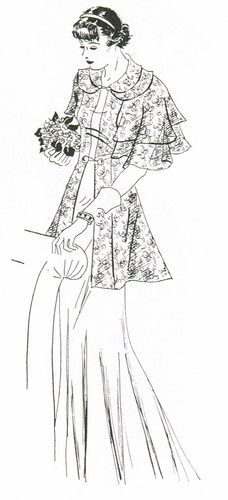
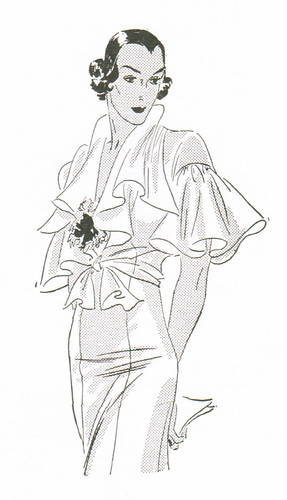
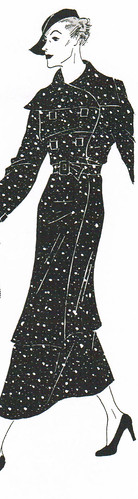
Today I have showered myself with sewing goodies of all kinds from many places.  My 1930s fashion and sewing books arrived today.  All of these books are looking promising but my favorite so far is the book of illustrations only, Fashions of the Thirties.  They're copyright-free so here's a peek:

Double breasted coat

Tiered flounce evening jacket

If I could go back in time, learn some drafting and pattern-making, and buy this book last year...I would have made this for my wedding dress (minus the widow's peak hairdo).  How feminine and glamorous is this?!!

Flouncy cape

I also received my first Bemberg linings from Vogue Fabrics!  These are even better than the samples.  I can't wait to line some pants and jackets.  So very silky!  I also got some crappy tricot lining from them--yuck!  I must give a shout out to Lucy's Fabrics for sending me some yummy tricot lining samples.  The Whisper is like butter.  The Helenca is so much nicer than the tricot I just received from Vogue Fabrics and quite a bit cheaper.  Definitely ordering some of these.

I also hit Hancock's for the half off notions and $3.88 USD Vogue patterns sale.  Vogue 8633 still eludes me but I got all the other patterns I was lusting for.


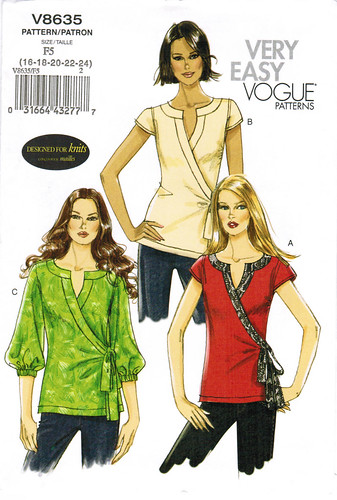
Vogue 8635:  I'm loving View C.

V8635 front

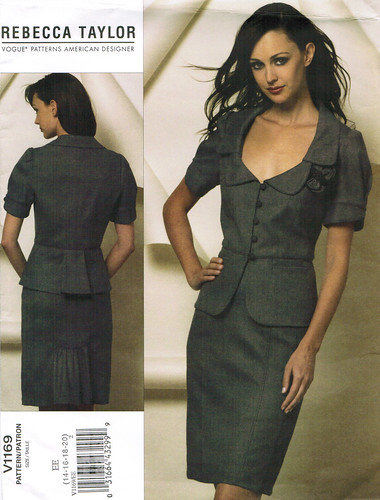
Vogue 1169:  I think this is too pretty for work.  If I had time (and a smaller rear), I'd make this for DH's employer's banquet in a few weeks.

V1169 front

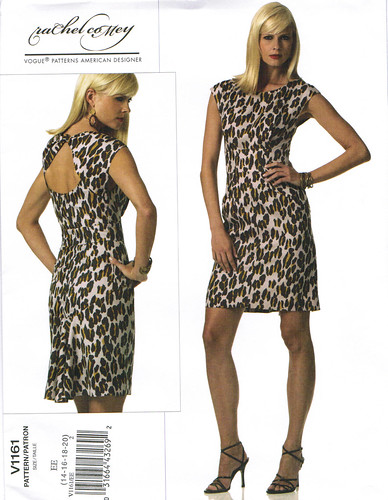
Vogue 1161:  Why hello, little black dress!

V1161 front

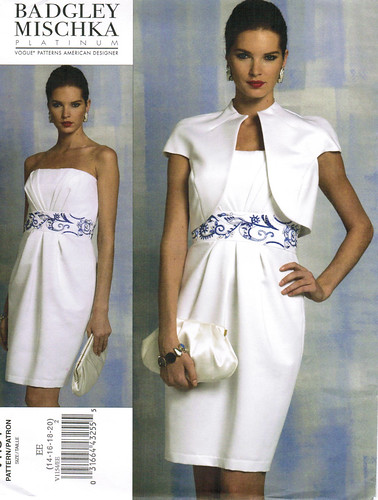
Vogue 1154:  I'm hoping one of my friends gets married this year so I have an occasion to wear this (not in white).

V1154 front

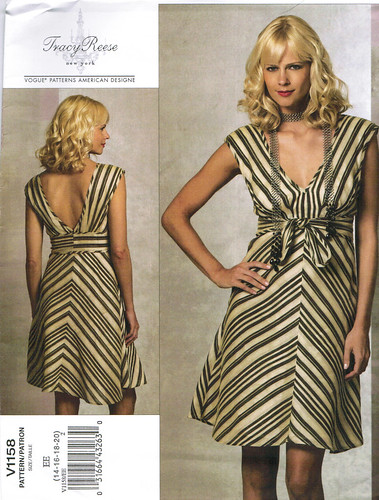
Vogue 1158:  Just because.  Next to Badgley Mischka, Tracy Reese is my 2nd favorite Vogue designer patterns.

V1158 front

I also purchased my first New Look pattern in years.  I've been debating what I could throw together for this banquet in 2 weeks.  I need to "look the part" for this event and not wear my usual mismatched, last minute outfit.  I was debating on making one of these dresses from materials already in my stash:

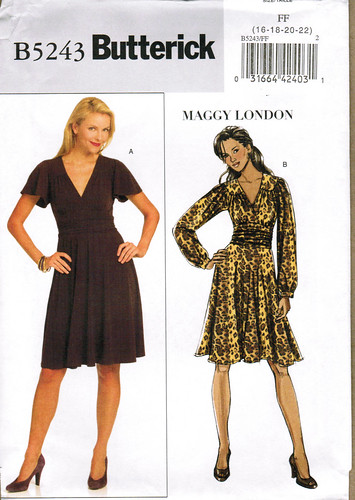
Purple poly/rayon jersey in Butterick 5243 (view B)

Butterick 5243 knit dress front image

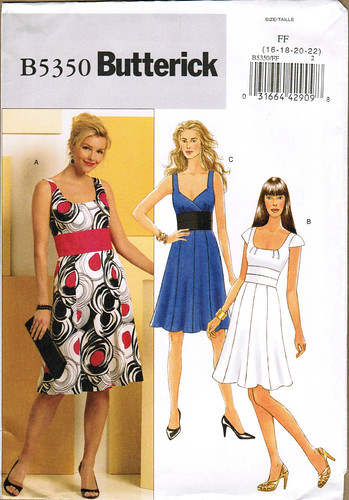
Royal blue crepe in Butterick 5350 (view B)

Butterick 5350 dresses front image

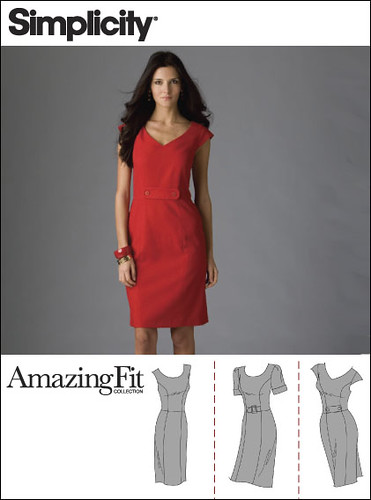
Purple pique in Simplicity 2648 (view with cap sleeves and V-neck)

Simplicity 2648 front image

Problem is I would be more comfortable in pants and a jacket.  And then this little gem jumped out at me at Hancock's.

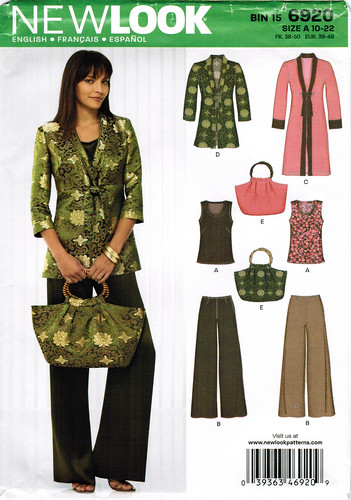
New Look 6920

NL 6920 front

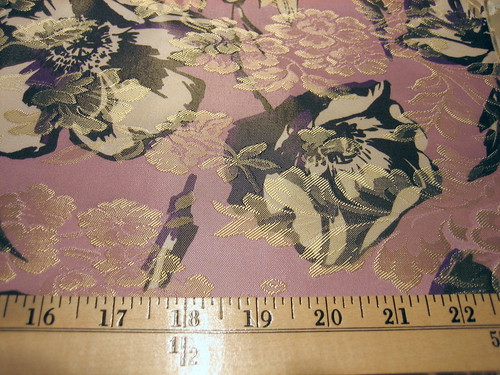
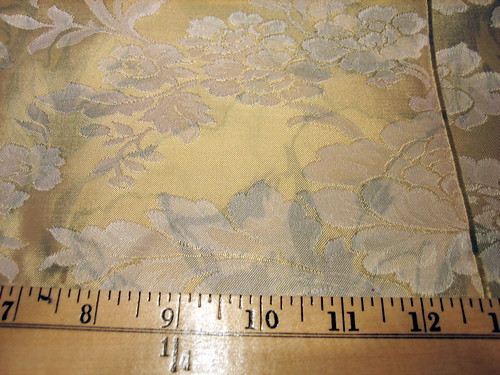
I have a Vera Wang Lavendar brocade from Fabric.com that was disappointing when I pulled it out of the box.  The flower pattern is huge and screams "upholstery!"  The wrong side, however, is gold with lavendar hues and a much smaller pattern.  Gold, really?  Yup.  When I saw this pattern, I knew what I had to do.  Even DH agrees this will look sharp.

Vera Wang Lavendar brocade right side
Vera Wang Lavendar brocade wrong side

I have some black/grey wool suiting-like fabric for the pants and I have 2 different shades of purple poly/rayon jersey for a quick tank.  I can do this...quickly.  I think I can, I think I can....  I may need a back-up plan.

Tuesday, February 16, 2010

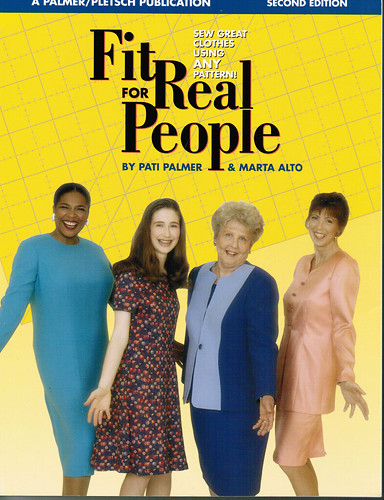
Book review: Fit for Real People by Pati Palmer & Marta Alto

Fit for Real People

Paperback, 256 pages
Published in 2007
ISBN:  9780935278651
Suggested retail price $24.95 USD, Amazon link

I enjoy reading Palmer/Pletsch publications but do find them a bit quirky.  They repeat the information quite a bit and show you more than one way to accomplish something.  They also make references to other P/P publications (by page number) or to other places in the same text that relate to the current topic.  This is pretty handy for a reference.  I sometimes think the chapter placement or content placement is a little backwards.  In this book, for example, there is a chapter comparing a size 10 basic bodice pattern from several different companies.  The last chapter in the book shows those pattern pieces laid on top of one another for comparison.  Wouldn't it have made more sense to put this in the front with the rest of the bodice comparisons?  Overall, a good book and I saw immediate improvements in my garment fitting.  With the exception of more intricate designs, you can replace muslins with the tissue-fitting techniques they demonstrate in this book.

Book/Chapter Headings:

1. The Palmer/Pletsch Approach to Fitting
The basic steps of the P/P fitting techniques:  Buy the right size pattern.  Tissue-fit the pattern.  Alter and re-fit the pattern.  Pin-fit-as-you-sew the fabric pieces.  The rest of the book is spent elaborating on these steps.  You can skip much of this book and still learn the P/P fitting techniques, apply those techniques immediately, and enjoy better sewing results.


2.  A History of Pattern Sizing
Interesting history of what pattern and clothes sizing used to be and what they are now.  To sum it up, today's sizing is basically vanity sizing.  Forget about the size number and just find what fits you.  European sizes are discussed as well as a comparison between pattern sizes and RTW sizes. 

3.  Fit Facts
Nice side-by-side comparisons of fitting pattern muslins from Vogue, Butterick, McCalls, Simplicity, Style and Burda all in the same size on the same model.  They basically all fit the same so a 12 in McCalls will fit the same as a 12 in Vogue.  Explanation of what minimum ease should be at the bust, waist and hips.  Short versus petite sizes are compared on real women's bodies.  Fitting for the mature body compared to the youthful figure.  Other tidbits of information like a size Medium (12-14) is sized for the 14, patterns with more seams are easier to fit, and patterns are designed for a B-cup bust.

4.  Buy the Right Size
How to properly measure your bust and hips and which measurement to use for determining pattern size.  When you're in between sizes, buy the smaller unless the garment is very fitted.  Includes a table comparing Burda and American pattern company sizes.

5.  But the Pattern Doesn't Come in My Size!
P/P philosophy is all patterns can be made into petite, tall, wide or narrower sizes.  I love the diagram explaining how to grade a pattern for a different size. 


6.  Special Sizes
P/P explains that most patterns are sold in Misses' sizing because pattern manufacturers can sell more of these.  Explanations of the following sizes are included:  Miss Petite, Half Size, and Women's.  Girls' and Misses' sizing is also compared.  Explanations of what happens to a woman's figure as she ages and how this affects the fit of a pattern.  


7. What About Ease?
Minimum ease versus design ease, which fabrics have more or less give and how that will affect the finished garment, and how fashion over the years has changed design ease.  Tips for determining how much ease you may want in your finished garments by using the pinch test, tape measure test and clothes-in-your-closet test.  Nice illustrations with comparisons of close fitting, fitted, semi-fitted, loose fitting and very loose fitting styles in tops, bottoms, coats, etc.


8.  Analyze Your Body
Basic body shapes (hourglass, rectangle, triangle, etc.) and how to analyze your shape to identify fitting issues.  Detailed steps for making a body graph or body map.


9.  Make a Body Map
How to make an adjustable basic pattern, prepare a tissue pattern for fitting, and what order to fit the pattern pieces.  Benefits of using gingham as a fitting muslin. 


10.  Tissue-Fit & Fit-As-You-Sew
Checklist for fitting and sewing


11.  Two Ways to Alter Patterns
Cut into the tissue and move tissue until the pattern piece fits OR add tissue to the outside edge of the pattern piece.


12.  Professional Alteration Tips and Tools: Ten Steps to Perfect Fit
Tools: gridded cardboard surface, pattern alteration tissue, rulers, french curves, tape, pencil, pins, mirrors.  Tips for altering tissue: cut up to the stitching line only, true the lines, blend lines, press the tissue, mark final seam lines, and cut tissue accurately. 


The following chapters explain how to fit various trouble spots:
13.  Length & Width

14.  The Back

15.  The Neck & Chest

16.  Darts

17.  Bust

18.  Shoulders & Armholes

19.  Sleeves

20.  Waist, Hips, Tummy & Thighs


Tons of examples of fitting issues on real women:
21.  Real People

22.  Fit Decisions


23.  Make It Flattering
Examples of ideas for altering the design of a pattern to make it more flattering on your figure type.


24.  Sewing Techniques that Affect Fit
Fabric choice, print placement (in other words, don't put the big flowers on your boobs), changing grain to improve fit, finding/straightening the grain, dart techniques, pressing, gaping V-necks, etc.


25.  Designing and Redesigning
Brief overview of draping, flat pattern making, computer pattern drafting, and dress forms.  This section is not intended to show you how to do it but to get you thinking about changing design elements when you wish a pattern was just a little bit different.


26.  Pattern Company Basic Bodice Comparison
McCalls, Vogue, Simplicity and Burda bodice pattern pieces are laid on top of one another for comparison.  They are all the same size but may differ slightly.  Example:  A Simplicity pattern may be wider at the waist on the front section but narrower on the back section so the total circumference is the same as a Vogue pattern. 

Does this book have clear illustrations or photographs?
This book does have many great photographs of fitting issues and solutions for REAL women; no runway models here.  The bulk of the book has great line drawings for illustrating what pattern adjustments will be needed for various fit issues.

Would you recommend this book as a MUST HAVE? 
Absolutely.  The techniques are illustrated over and over again for various fitting issues so it was easy to apply this information right away.  I saw immediate results in my sewing.  Better fitting and less time getting the fit right in my garments.   
Sunday, February 14, 2010

What is your favorite decade for fashion?

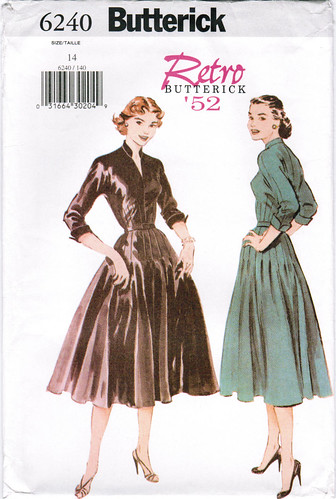
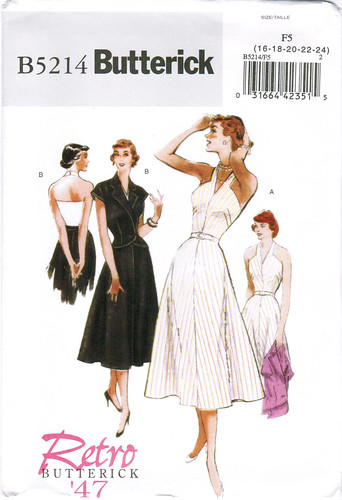
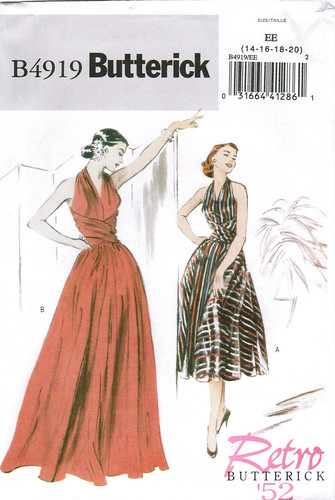
Don't get me wrong.  I'm pretty happy with today's fashions, particularly for sewing.  I've been toying with sewing some vintage fashions lately but I can't see myself wearing them.  I've bought several of the Butterick and Vogue reproduction vintage sewing patterns lately.

B6240 front image

B5214 front image

B4919 front image

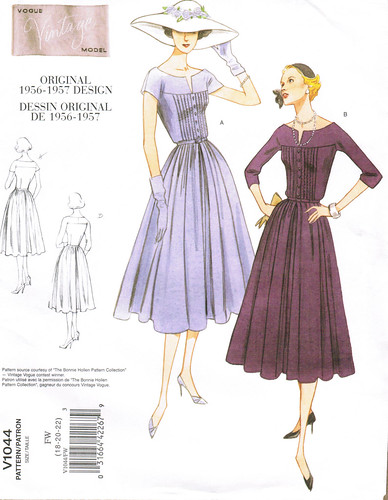
Vogue 1044 dresses front image

I just don't know when and where I would wear these.  I'm guessing I'll just have to make them and find excuses to wear them.  What I've noticed about several of the reproduction patterns available in stores right now is they include full skirts mostly.  If you're 64 inches tall with a VERY large rear, bulk on the bottom half is not a good idea.

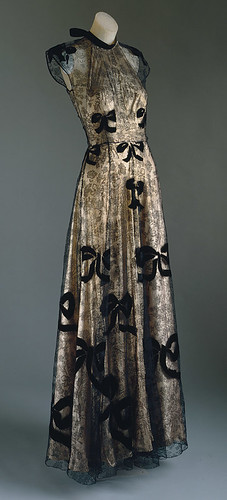
I stumbled onto a vintage sewing pattern website today and realized I'm not even a huge fan of the 1940's and 1950's.  I love the 1930's!  From my brief internet "research," the fashion of the 1930s was impacted by the Great Depression and resulted in more conservative, womanly clothes.  Shoulders were emphasized, rayon became a popular fabric and the zipper was introduced.  Skirts were longer and more A-line and waistlines were returned to a more natural position.  Gloves were worn with evening and daywear.  (In today's germophobe society, those gloves would be a great idea!)  Bias cut was all the rage and Madeleine Vionnet was its master.

Madeleine Vionnet 1938 black

(Source:  www.metmuseum.org)

I found much within the 1930s that I would wear day-to-day.

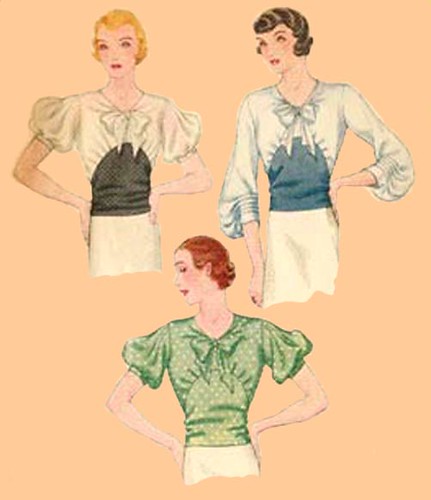
1933 blouse

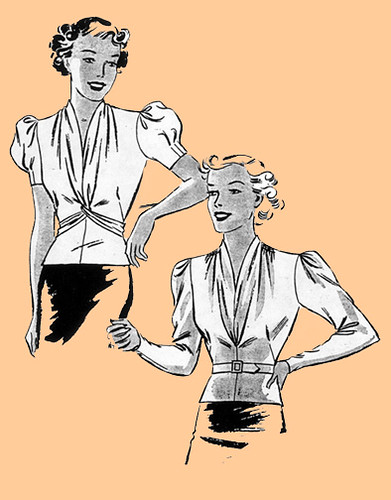
1938 blouse

1936 evening

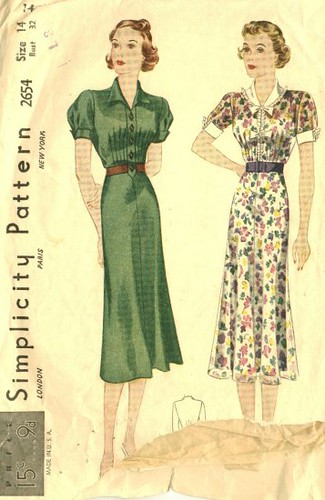
simplicitybeltdress

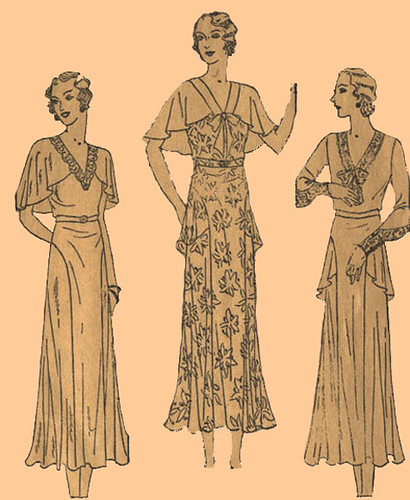
1930s tea frocks

Are you thinking what I'm thinking?  Exactly!  Time to find some books about 1930s fashion and pattern making.  Glad we're on the same page.

I ordered these today:

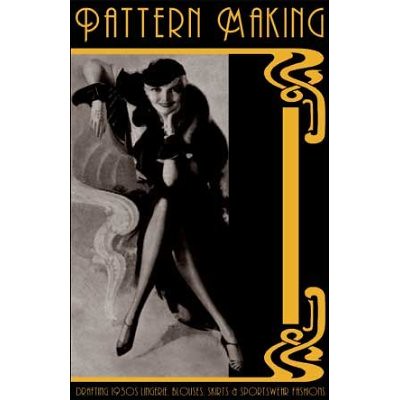
Pattern Making Drafting 1930s Lingerie Blouses Skirts & Sportswear Fashions

Pattern Making Drafting 1930s Lingerie Blouses Skirts & Sportswear Fashions

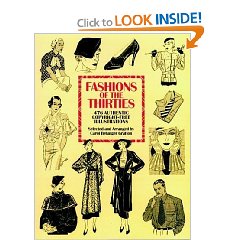
Fashions of the Thirties 476 Authentic Copyright Free Illustrations

Fashions of the Thirties 476 Authentic Copyright Free Illustrations

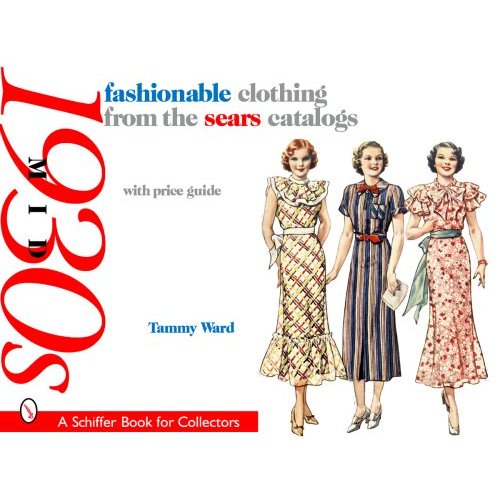
Fashionable Clothing from the Sears Catalogs Mid 1930s

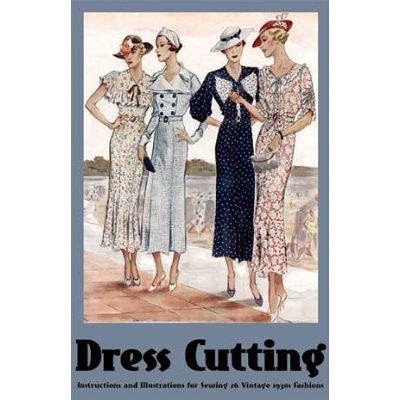
Dress Cutting Instructions & Illustrations for Sewing 26 Vintage 1930s Fashions

(Source: amazon.com)

I wonder though...how glamorous do these fashions really look without the hat and gloves?  Purse and shoes, no problem but I don't wear hats and gloves are for winter only. 

What is your favorite decade for fashion?

Tuesday, February 9, 2010

Sewing but not posting....

I have been sewing quite a bit lately but given the choice between sewing or posting, I'll sew. In the meantime, there are about 15 posts in the works. Sounds like my sewing UFO pile!!

Here's what's coming:

As I predicted while cutting out McCall's 5925, this project was doomed. I hated it from the start but decided to push on. It sat on my desk, taunting me for weeks, stifling my sewing mojo. I decided to knock it out one night and never look at this pattern again. As all sewers know, that attitude will have you making really stupid mistakes and tossing the garment out.

M5925 wadder

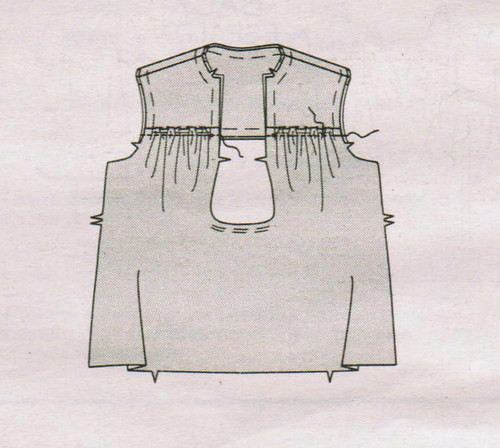
What you are looking at here is the front and back yokes, self-lined and already sewn together. I was adding the top ruffled edges to the yokes and got my left and right mixed up. So now I have a left front ruffle stitched to a right front yoke.

This is what it is supposed to look like:

M5925 wadder line drawings

DH had a great laugh about this one but still thinks my disastrous petticoat is the ultimate mess-up. Yes, this garment could be fixed but I just didn't care enough to do that. The whole time I was working with the pieces and reading the directions, I kept thinking to myself, "There has to be a better way of doing this." It's not a bad pattern; just not a great one. It was only going to be a nightgown anyway.

I'll leave you with this great article by Susan Khalje; the first in a 2-part series. Working With Embellished Fabrics is a great teaser for her OOP book, "Bridal Couture," which she is now putting on CD-Rom. She has a nice way of making a seemingly difficult concept easy to understand so you have the confidence to try it yourself.

I must speak...Project Runway is definitely a designing, not sewing challenge

Did you see the latest episode of Project Runway?  I was astonished by how poorly all the garments fit their models.  The construction was pretty crappy on most too.  I've seen several mistakes made by contestants again and again.  The two worst ones are (1) not understanding the properties of the fabric you have chosen and (2) not comprehending construction techniques well enough to fully execute your design.  I'm convinced that many of these great designs on paper would look fabulous in person IF the designers had a better knowledge of fabric and construction.  With this episode, the designers committed a third sin:  not understanding a woman's body.  Here's a tip, anything more than an A cup needs support.  

I actually like Jonathan's design but the low-hanging, ski slope boobs were very distracting. 

Other designers with boobie issues:  Amy's winning design (floppy, loose bodice on a full-busted woman?!), Emilio (mashed boobies with seams out of place), Jay Nicholas (covered up the boobies with a distracting design that won't lay flat), and Jesse (more mashed boobies but they are also popping out of an ill-fitting dress).

Seth Aaron got the boob placement right but the dress has gaping at the armholes.  Real women have REAL curves.  I'm starting to sound like Heidi--it's all about the boobs!  If you get the boobs right, it will make up for other problems. 

Best boobie award goes to this week's loser, Jesus. The man can sew but his designs were always just a little off. I guess it's fitting that the hooker dress has the best boobies.

Maya's design was my favorite.  The boobs were where they belong.  The construction was good and the draping was beautiful.  The choice of fabrics was great.  I love how she incorporated the heart shape on the chest without being really obvious.  I've often thought adding layers of fabric to a hip area was a bad idea but this woman can pull it off because she has a nice, lean shape.  This dress was very different from all the others and different from anything I've seen elsewhere.  Maya was robbed and I think she knew it. 

I think Mila, Emilio and Amy are my favorite designers.  Mila is the most consistent.  Her Campbell's soup dress immediately makes you think of Campbell's soup so she accomplished this task the best but I'm just not a fan of a huge star on a dress.

This post was especially catty for me but I couldn't help noticing how many designers had so much trouble with boobs...and any other curve on a real woman.  Here's hoping future challenges reveal better results.

Just my opinion....

This policy is valid from 11 December 2009
This blog is a personal blog written and edited by me. This blog does not accept any form of advertising, sponsorship, or paid insertions. We write for our own purposes. However, we may be influenced by our background, occupation, religion, political affiliation or experience.
The owner(s) of this blog will never receive compensation in any way from this blog.
The owner(s) of this blog is not compensated to provide opinion on products, services, websites and various other topics. The views and opinions expressed on this blog are purely the blog owners. If we claim or appear to be experts on a certain topic or product or service area, we will only endorse products or services that we believe, based on our expertise, are worthy of such endorsement. Any product claim, statistic, quote or other representation about a product or service should be verified with the manufacturer or provider.
This blog does not contain any content which might present a conflict of interest.
To get your own policy, go to http://www.disclosurepolicy.org